
How to Design a Non-Toxic Home from Scratch 2026: The Complete Room-by-Room Guide
- Kate

- 4 days ago
- 10 min read
Designing a non-toxic home from scratch in 2026 means making deliberate decisions at every stage of a build or renovation — before the walls are closed, before the finishes are chosen, before the furniture arrives. The chemicals that off-gas from conventional building materials, the VOCs in standard paints, the PFAS in non-stick coatings, the formaldehyde in composite wood products, and the chlorine byproducts in unfiltered shower water don't announce themselves. They accumulate quietly, and they're significantly harder to address after a home is finished than at the design stage.
This guide is built for two types of buyers: people planning a ground-up build or full renovation who want to make non-toxic decisions from the beginning, and people in an existing home who want to systematically reduce chemical exposure room by room. Neither is starting from zero — the awareness, product standards, and testing resources available in 2026 make a genuinely non-toxic home more achievable than at any point in the past. The challenge is knowing which categories matter most and which products have actually been verified, not just marketed as "natural" or "clean."
Start with air, water, and sleep surfaces — these three categories represent the highest daily exposure windows in most homes and the highest return on investment for a non-toxic design protocol. Address building materials and finishes next if you're in a build or renovation, then work outward through furniture, textiles, cleaning products, and cookware.

How We Developed This Guide
This guide prioritizes exposure categories by daily contact time and documented health research — air quality and sleep surfaces first, building materials and finishes second, textiles and cleaning third.
We organized this guide using a risk-exposure framework: the categories with the highest daily exposure time (bedroom air quality, sleep surfaces, shower water) are addressed first, followed by building materials that off-gas during and after construction, then longer-lived furniture and textile decisions, and finally cleaning and cookware. Product recommendations throughout this guide link to categories or specific verified products — where a product post exists on Vapour & Stone, internal links connect to the full comparison. Research method: desk review of EPA indoor air quality documentation, Environmental Working Group (EWG) product standards, GREENGUARD Gold certification criteria, and published research on indoor chemical exposure. Specifications and product availability last verified July 2026.
Disclosure: Some links in this post are affiliate links. We may earn a commission at no extra cost to you.
Step 1: Prioritize Air Quality First
Indoor air quality is the single highest-impact non-toxic intervention available — the EPA estimates indoor air can be 2-5 times more polluted than outdoor air in conventionally furnished homes.
Indoor air pollution doesn't come only from industrial sources. Standard building materials, furniture, and cleaning products continuously off-gas volatile organic compounds (VOCs), formaldehyde, and particulate matter into the spaces where you spend most of your time. The three-part air quality protocol for a non-toxic home:
Air filtration: A HEPA filtration system with activated carbon captures both particulate matter (PM2.5, dust, pollen, pet dander) and gas-phase pollutants (VOCs, formaldehyde). Our 2026 Air Quality guide covers the top design-forward air purifiers for the luxury home.
Ventilation: Fresh air dilutes indoor pollutants. In a tightly sealed new construction home, mechanical ventilation (HRV or ERV systems) is essential — without it, energy-efficient building envelopes trap indoor pollutants at higher concentrations than in drafty older homes. If you're designing from scratch, specify an HRV or ERV as a non-negotiable mechanical system component.
Source reduction: Remove the pollution at its source rather than only filtering after the fact. This means choosing low-VOC or zero-VOC paints, GREENGUARD Gold-certified furniture and cabinetry, and avoiding aerosol sprays and conventional cleaning products inside the home. Source reduction is cheaper and more effective than filtration alone.

Step 2: Filter Your Water — All of It
Shower filtration is as important as drinking water filtration — the skin and lungs absorb chlorine byproducts during a hot shower at rates comparable to drinking unfiltered water.
Most non-toxic home protocols focus on drinking water and miss shower and bath water entirely. In a hot shower, chlorine in municipal water vaporizes and is absorbed both through the skin and inhaled as steam — research suggests a 10-minute hot shower results in chloroform and chlorine byproduct exposure comparable to drinking several glasses of unfiltered tap water. The two-part water protocol:
Drinking and cooking water: A whole-house reverse osmosis system or a high-quality under-counter filtration system addresses the full spectrum of contaminants. Our Best Luxury Whole-House RO and Best Under-Counter Water Filtration guides cover the verified options.
Shower and bath water: A Vitamin C shower filter neutralizes chlorine and chloramine at the showerhead. Our Best Vitamin C Shower Filters 2026 guide covers the most effective options. For a full-house approach, a whole-house carbon filter upstream of the water heater eliminates chlorine from all hot water points simultaneously.
Step 3: Address the Bedroom First
You spend 6-9 hours per night in direct contact with your mattress, pillow, and bedding — making the bedroom the highest-priority non-toxic room in the home.
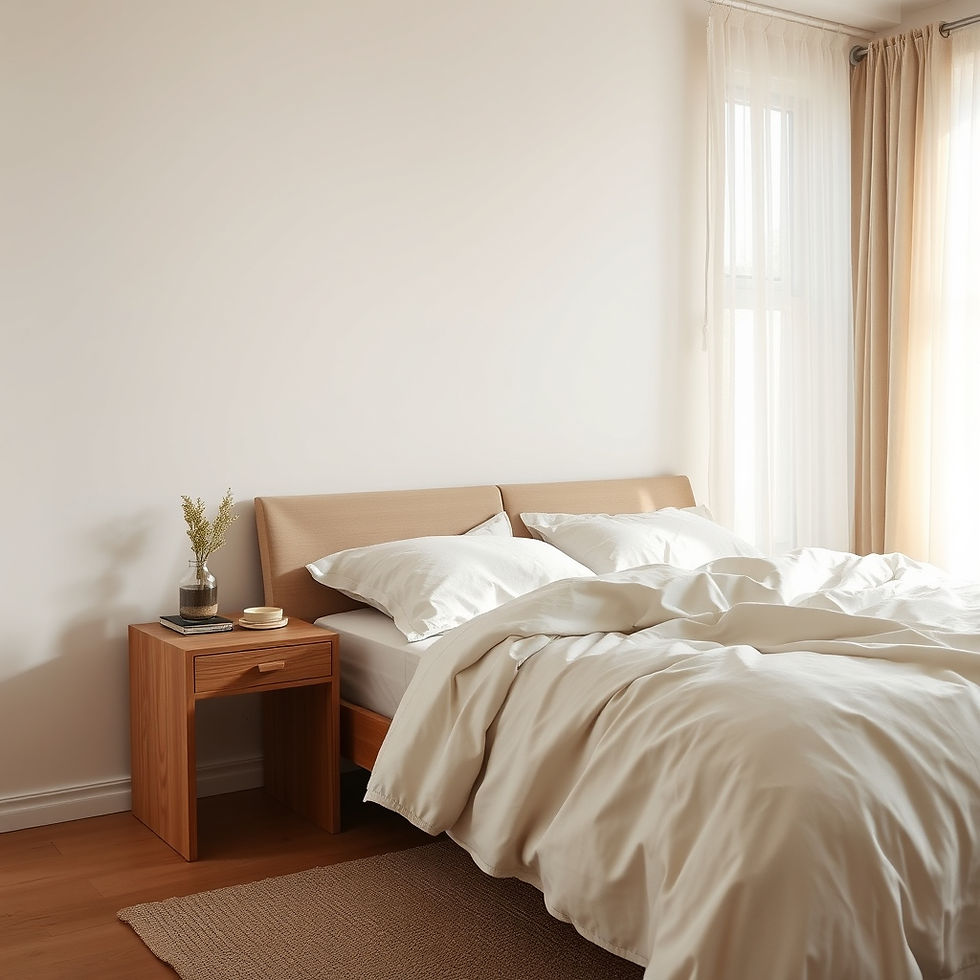
The bedroom has the longest continuous daily occupancy of any room and the most direct skin contact with surfaces. The non-toxic bedroom protocol:
Mattress: Conventional mattresses may contain polyurethane foam, flame retardants (including phosphorus-based chemical treatments), and adhesives that off-gas VOCs. A certified organic or natural latex mattress eliminates the foam and chemical treatment layers. Look for GOTS (Global Organic Textile Standard) or GOLS (Global Organic Latex Standard) certifications — these are the most rigorous third-party standards for organic claims in sleep products. Our Essentia vs Avocado 2026 and Best Luxury Mattresses for Biohackers 2026 guides cover the verified options.
Bedding: Conventional cotton is one of the most pesticide-intensive crops globally. GOTS-certified organic cotton or OEKO-TEX Standard 100 certified bedding verifies no harmful chemical residues in the finished textile. Our Best Luxury Non-Toxic Bedding 2026 guide covers the top brands.
Pillow: Synthetic fill pillows can off-gas from the polyester or memory foam materials. Natural latex, buckwheat, or GOTS-certified organic cotton-filled pillows eliminate the synthetic core. See our Best Luxury Pillows 2026 guide.
Paint and walls: The bedroom walls should use zero-VOC paint — not merely low-VOC. Major paint manufacturers (Benjamin Moore Natura, Sherwin-Williams Harmony, Clare Paint) all offer true zero-VOC formulas. The difference matters: standard low-VOC paints may still contain VOC levels that off-gas for weeks after application. Zero-VOC formulas off-gas minimally and clear quickly.
Step 4: Choose Non-Toxic Building Materials (For Builds and Renovations)
If you're designing from scratch, building material decisions made before walls close have 10-20 year implications — this is the highest-leverage stage for a non-toxic home.
For buyers in a new construction or full renovation, the building envelope stage is where non-toxic decisions have the longest-lasting impact:
Flooring: Solid hardwood, natural stone, concrete, and porcelain tile are the lowest off-gassing flooring choices. Engineered wood and laminate products may contain formaldehyde-based adhesives and resins — specify CARB Phase 2 or GREENGUARD Gold certified products if using these materials. Vinyl flooring (LVT, LVP) varies enormously in VOC content; look for FloorScore certification. Carpet off-gases the most consistently of any flooring choice and is the hardest category to make genuinely non-toxic.
Cabinetry and millwork: Conventional composite wood products (MDF, plywood, particleboard) use urea-formaldehyde adhesives. CARB Phase 2 certified products meet California's strict formaldehyde emission standards — look for this certification on any cabinetry, shelving, or millwork specification. Solid wood cabinetry with water-based or hardwax oil finishes is the gold standard.
Insulation: Spray foam insulation off-gases isocyanates during and after application. Mineral wool (Roxul/Rockwool), dense-pack cellulose, and borate-treated cotton insulation are the lower-chemical alternatives. If spray foam is used, specify closed-cell SPF with at least 28 days of ventilation before occupancy.
Paint: Specify zero-VOC paint throughout — not just in bedrooms. The kitchen, nursery, and any room with limited ventilation benefits equally from zero-VOC choices.
Adhesives and sealants: Construction adhesives, subfloor adhesives, and tile setting mortars all contribute to indoor air quality. Low-VOC and solvent-free formulations are available for all major applications and should be specified at the construction document stage.
Step 5: Furniture and Textiles
Furniture off-gassing is most intense in the first 6-12 months after manufacture — sourcing GREENGUARD Gold certified furniture or solid wood pieces eliminates most of the chemical concern.
Conventional upholstered furniture contains polyurethane foam, chemical flame retardants (historically PBDE, now replacement chemicals with similar profiles), and adhesives that off-gas over time. The non-toxic furniture protocol:
Upholstered furniture: Look for GREENGUARD Gold certification (the most rigorous indoor emissions standard for furniture), or choose pieces with natural latex, organic cotton, or wool fill. California TB117-2013 is a flammability standard that doesn't require chemical flame retardants — look for this designation when combined with natural materials. Avoid older furniture that may contain PBDE flame retardants.
Case goods (wood furniture): Solid wood with natural oil or water-based finishes is the lowest off-gassing choice. Vintage solid wood furniture has already off-gassed most of its VOC content. GREENGUARD Gold certified composite wood furniture meets strict emissions standards.
Rugs and textiles: GOTS-certified wool or organic cotton rugs are the non-toxic choice. Conventional synthetic rugs (nylon, polyester) off-gas from backing adhesives and may contain PFAS treatments. Our Best Luxury Non-Toxic Bedding 2026 guide covers verified textile brands.
Weighted blankets: Our Best Luxury Weighted Blankets 2026 guide covers the verified non-toxic options for sleep support.
Step 6: Non-Toxic Kitchen Design
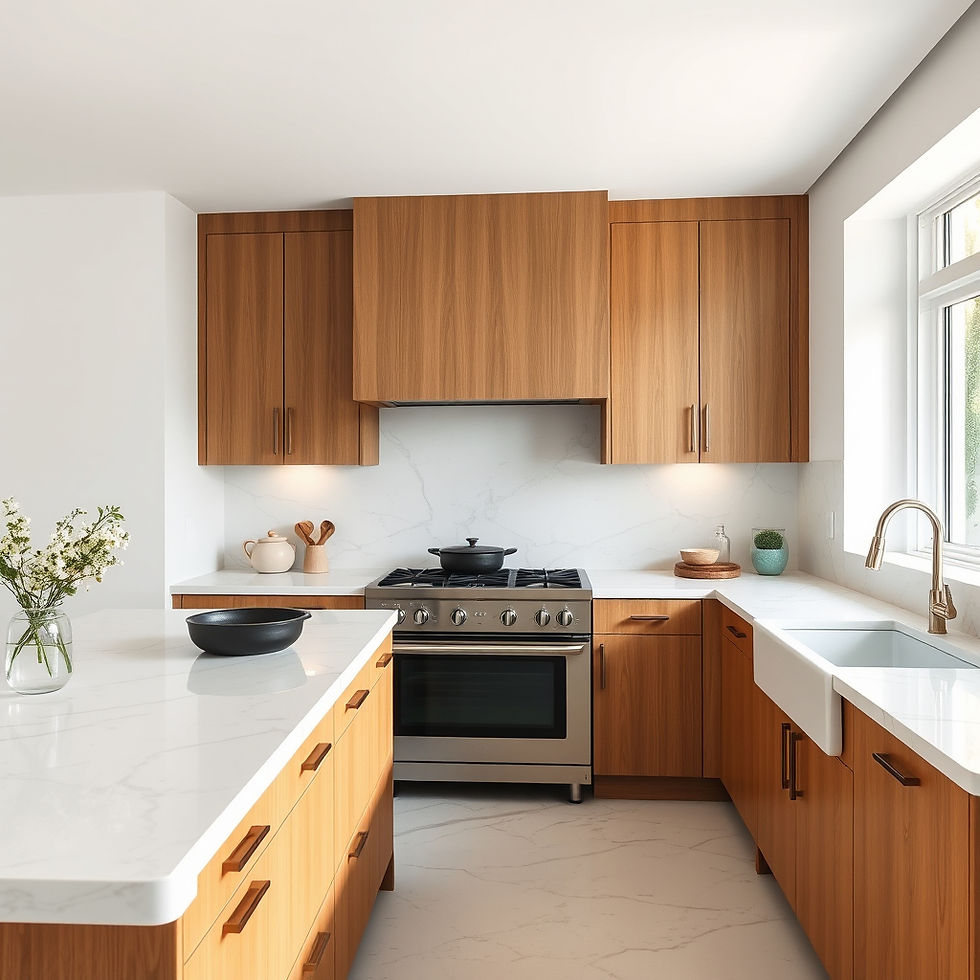
The kitchen is where food contact, high heat, and chemical-coated cookware intersect — PFAS in non-stick coatings, chlorinated tap water, and conventional cleaning products make it one of the highest-chemical rooms in a typical home.
Cookware: PTFE (Teflon) non-stick coatings release PFAS chemicals at temperatures above 500°F and when scratched. Cast iron, carbon steel, stainless steel, and ceramic-coated cookware are the verified non-toxic alternatives. See our Regenerative Kitchen guide for the full protocol.
Water: The kitchen sink water supply is ideally filtered at the point of use. Our Best Under-Counter Water Filtration 2026 guide covers the verified systems for drinking and cooking water.
Cleaning products: Conventional dish soaps, surface sprays, and degreasers contain fragrances (often synthetic, with undisclosed chemical compositions), surfactants, and preservatives that leave residues on food-contact surfaces. EWG Verified or Safer Choice certified cleaning products meet the most rigorous ingredient transparency standards. Fragrance-free formulations are the most conservative choice.
Ventilation: Range hoods that vent to the outside (not recirculating) remove cooking combustion byproducts, grease particles, and VOCs from the kitchen air. Our Best Luxury Range Hoods 2026 guide covers the top venting options.
Step 7: Lighting for Circadian Health
Conventional lighting suppresses melatonin and disrupts circadian rhythms — tunable lighting that shifts from cool white during the day to warm amber in the evening is the non-toxic lighting standard for a wellness home.
Blue light from standard LED fixtures suppresses melatonin production when experienced in the evening hours, disrupting sleep onset and sleep quality. The non-toxic lighting protocol:
Daytime: Cool white light (5000-6500K) supports alertness, cortisol regulation, and daytime performance. Natural light through windows should be maximized in workspace and living areas.
Evening (after sunset): Warm amber light (under 2700K, ideally 1800-2200K) avoids blue light frequency that disrupts melatonin. Tunable LED fixtures that shift color temperature throughout the day automate the transition. Our Luxury Circadian Lighting guide and Circadian Lighting for Home Office guides cover the verified options.
Blue light blocking: For screens used in the evening, blue light blocking glasses are the most practical supplement to tunable lighting. Our Best Blue Light Blocking Glasses 2026 guide covers the verified options. (Link to your upcoming post once published.)
Step 8: Scent and Fragrance
Synthetic fragrance is one of the most common indoor chemical sources — conventional candles, air fresheners, and plug-ins release VOCs, benzene, and particulate matter into indoor air.
Candles: Paraffin candles are derived from petroleum and release benzene and toluene when burned. Soy, beeswax, or coconut wax candles with cotton wicks are the non-toxic alternatives. Our Best Non-Toxic Candles 2026 guide covers the verified brands.
Diffusers: Ultrasonic essential oil diffusers are the cleanest scent delivery method for the home — no combustion, no synthetic fragrance chemicals, and no aerosol propellants. Our Best Luxury Diffusers 2026 guide covers the top options.
Avoid: Plug-in air fresheners, aerosol sprays, and "fragrance" as an ingredient in any product used indoors. The term "fragrance" on a product label can represent a proprietary blend of hundreds of chemicals, most of which are not individually disclosed and many of which have limited safety data.
Non-Toxic Home Certifications: What to Look For
Certification | What It Covers | Best For |
GREENGUARD Gold | Chemical emissions from building products and furniture | Flooring, cabinetry, furniture, paint |
GOTS | Global Organic Textile Standard — full supply chain organic | Bedding, clothing, textiles |
GOLS | Global Organic Latex Standard — organic latex processing | Latex mattresses and pillows |
OEKO-TEX Standard 100 | No harmful substances in finished textile | Bedding, towels, apparel |
CARB Phase 2 | Formaldehyde emissions from composite wood | Cabinetry, flooring, furniture |
NSF/ANSI 58 | Reverse osmosis water filtration systems | Drinking water filters |
EWG Verified | No EWG-flagged ingredients; full transparency | Cleaning products, personal care |
Safer Choice (EPA) | EPA-verified safer ingredient standards | Cleaning products |
Frequently Asked Questions: How to Design a Non-Toxic Home 2026
What is the most important first step in designing a non-toxic home?
Air quality and sleep surfaces are the highest-priority starting points — they represent the longest daily exposure windows. A high-quality air purifier with HEPA and activated carbon, zero-VOC paint, and a certified organic mattress deliver the highest return on investment for a non-toxic home protocol before any other changes.
Is "natural" the same as non-toxic?
No. "Natural" is an unregulated marketing term with no standardized definition. Products labeled natural may still contain allergens, irritants, or chemicals of concern. The most reliable indicators of a genuinely non-toxic product are third-party certifications — GREENGUARD Gold, GOTS, EWG Verified — rather than marketing language on the label.
How long does it take for new construction materials to off-gas?
It depends on the material and ventilation. Standard paints off-gas most intensively in the first 72 hours after application, with VOC levels declining over 2-4 weeks. Composite wood products with formaldehyde-based adhesives off-gas at significant rates for months to years. Spray foam insulation requires a minimum of 28 days of ventilation before occupancy. Zero-VOC and GREENGUARD Gold certified materials dramatically reduce this window.
Do I need to replace everything at once?
No. A phased approach prioritizing bedroom air quality, water filtration, and sleep surfaces first — then working through building materials, furniture, and textiles — is both more practical and more effective than trying to address everything simultaneously. The bedroom protocol alone significantly reduces daily chemical exposure.
What is the most overlooked non-toxic home upgrade?
Shower water filtration is consistently the most overlooked. Drinking water receives most of the attention, but chlorine and chloramine exposure during a hot shower — through skin absorption and inhalation of steam — is a meaningful daily source of chemical exposure that a simple Vitamin C showerhead filter addresses for under $100.

Vapour & Stone Verdict
A non-toxic home from scratch is not a single product decision or a single renovation — it's a sequenced set of choices across air, water, sleep, materials, and textiles, made in the order of highest daily exposure impact. The framework in this guide prioritizes those decisions correctly: air and water first, bedroom second, building materials third if you're in a build or renovation, then furniture and textiles, cleaning, and scent.
The most important shift in non-toxic home design in 2026 is the availability of credible third-party certification across every major category — GREENGUARD Gold, GOTS, GOLS, EWG Verified, and NSF/ANSI standards give buyers verifiable proof of non-toxic claims rather than marketing language alone. Building around those certifications, rather than around "natural" or "clean" marketing, is the most reliable foundation for a genuinely non-toxic home.
For the full product-level breakdown in each category, the internal links throughout this guide connect to Vapour & Stone's dedicated comparison posts in air quality, water filtration, bedding, mattresses, candles, diffusers, and circadian lighting.

A non-toxic home isn't built in a single renovation — it's the result of consistent decisions made across materials, air, water, and textiles over time. The certifications and product comparisons throughout this guide give you a verified framework to make those decisions confidently, one room at a time.


Comments