
Stop Building Your Home Sanctuary Until You Understand the Science of Wellness Stone
- Kate

- Apr 6
- 3 min read
When we talk about building a "home sanctuary," the conversation usually starts with the technology: medical-grade air purifiers, molecular hydrogen servers, and full-spectrum saunas. But the most advanced piece of wellness technology in your home isn't plugged into a wall. It is the very surface you stand on.
The materials you choose for your floors, walls, and wet rooms dictate the biological impact of your environment. In the luxury wellness space, natural stone is not merely an aesthetic choice; it is a functional biohack.

The Biological Impact of Natural vs. Synthetic Surfaces
Modern construction is heavily reliant on engineered surfaces. While synthetic quartz or epoxy-poured concretes mimic the look of nature, they often introduce Volatile Organic Compounds (VOCs) and micro-plastics into your indoor air.
In a dedicated recovery room—where heat and humidity are purposefully elevated—synthetic materials can accelerate off-gassing. Natural, low-porosity stones like quartzite, basalt, and high-density marble do not introduce these toxins. Furthermore, the tactile feedback of walking barefoot on natural, honed stone has been shown to subtly lower cortisol levels, grounding the body through sensory design.
Thermal Mass: The Secret to High-End Recovery Rooms

In architectural terms, "thermal mass" is the ability of a material to absorb, store, and release heat energy. This is critical if you are designing a contrast therapy suite.
A high-quality stone soaking tub acts as an insulating battery. Unlike acrylic or fiberglass tubs that immediately leach heat away from your bathwater, a solid stone resin or concrete tub absorbs the heat and radiates it back into the water, extending your soak time.
The Native Trails Avalon Concrete Soaking Tub is a standout for this. It is handcrafted from a blend of natural jute fiber and cement, providing the immense thermal mass of concrete while being 40% lighter than traditional pours. It retains heat exceptionally well for long-duration recovery soaks.
Designing Your Wellness Home Sanctuary

Creating a true Wellness Home Sanctuary requires more than just aesthetics; it requires a deep dive into material science. Your surfaces are the largest contributors to your indoor environment.
The Impact of Natural Stone
Your sensory experience continues at the vanity. The James Martin Brittany 60" Single Vanity is an essential component of a Wellness Home Sanctuary. Crafted from kiln-dried North American Birch, this piece avoids the high-VOC glues found in mass-market MDF alternatives.
When paired with a natural stone or Silestone quartz top, it provides a cool, antimicrobial surface that handles high humidity without off-gassing. This specific model also features an integrated power station, keeping your sanctuary clutter-free and functional.
Pairing Stone with High-Tech Heat

You don’t just drop a high-end sauna onto builder-grade laminate flooring. The surrounding materials must match the caliber of the equipment.
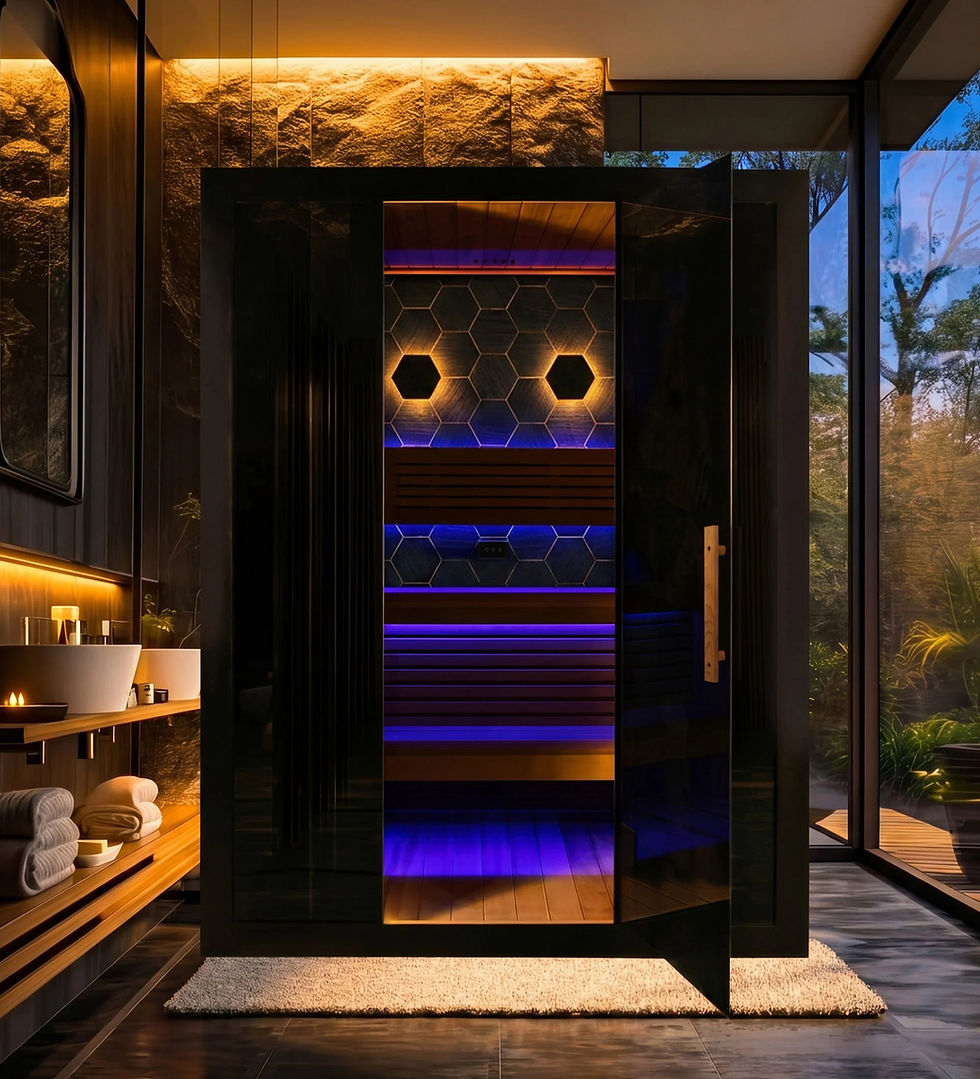
If you are installing a premium infrared unit, the floor beneath it should be a dark, dense natural stone like slate or basalt. These stones handle temperature fluctuations flawlessly and provide a grounding, natural contrast to the intense heat therapy.
My current gold standard for the home sauna is the Sun Home Equinox 3-Person Infrared Sauna. Because it is the only infrared sauna on the market that reaches 165°F while maintaining ultra-low EMF levels, it requires an environment that respects that power. Placing the Equinox on a solid stone floor ensures that no synthetic adhesives are heated to the point of off-gassing.
The Non-Toxic Stone Spec List
When working with your fabricator or architect, use this spec list to ensure your stone serves your health:
Specify "Honed" or "Leathered" Finishes: High-gloss polishes require chemical sealants that can degrade in high-humidity.
Demand Zero-VOC Sealants: Insist on water-based, zero-VOC penetrating sealers.
Opt for Monolithic Slabs: In wet areas, use the largest stone slabs possible to minimize grout lines and mold risk.
Conclusion: Build for Longevity
A true home sanctuary is more than the sum of its gadgets. It is an intentional ecosystem where your biological needs meet architectural excellence. By investing in natural stone with high thermal mass and zero-VOC profiles, you aren’t just decorating—you are engineering a space that supports your health from the ground up.
Building this way ensures that your home remains a recovery asset for decades, rather than a collection of quickly outdated gear.
What’s Next for Your Sanctuary?
Once your foundation is set, the next pillar is the air you breathe. Click here to read my 2026 Air Quality Edit to ensure your sanctuary remains a pure environment.


Comments